Key Insights
- Always-on OOH is about continuity.
- You can use street posters to maintain a physical presence in priority locations between campaigns.
- A smaller, consistent baseline can make sense when you’re working with a fixed budget.
- You can increase coverage around launches, tours, seasonal pushes and other commercial moments.
- Distinctive brand assets can give you something to communicate when there’s nothing new to promote.
- Street posters work best when you give them a clear job within your wider OOH plan.
Most of your marketing calendar probably revolves around campaigns. A launch, a tour, a seasonal push, a new product, a major event.
But what happens when there’s nothing new to announce?
You’ll spend more time between major campaigns than you do in them. Your audience doesn’t stop moving during that gap, so your brand doesn’t necessarily need to disappear either.
If you’re planning an out-of-home (OOH) campaign, the practical question is simple: what should happen to your physical brand presence between campaign bursts?
Street posters can give you a way to stay visible without treating every month like launch month.
The Gap Between Launches Is The Normal State
You’ll spend more time between launches than during them.
That makes the gap between campaigns a planning consideration, not an exception. If your brand only appears when there’s something new to sell or announce, your physical visibility can become very stop-start.
You don’t need launch-level activity all year. You do need to decide what happens when the launch ends.
For some brands, that means maintaining a smaller presence in priority locations. For others, it means returning to street posters when a particular audience, precinct or commercial moment calls for it.
The point isn’t to spend the same amount every month.
It’s to avoid disappearing completely.
What Mental Availability Actually Means
If you’re working on brand awareness marketing, you’ll often hear awareness and mental availability discussed together. They’re related, but they’re not the same thing.
Mental availability is the likelihood that your brand comes to mind in relevant buying situations. The Ehrenberg-Bass Institute for Marketing Science at the University of South Australia describes Category Entry Points as the thoughts and situations that bring a category to mind.
Brand recall is your ability to retrieve a brand from memory. Brand recognition is your ability to identify a brand when prompted. Both can tell you something about awareness, while mental availability asks a more useful question:
When the buying situation happens, is your brand easy to think of?
That’s where always-on brand awareness advertising can have a role. You’re not asking every poster to drive an immediate response. You’re keeping your brand present in the environments where relevant audiences move.
This is also where always-on marketing can become more practical than simply increasing spend around every launch. You’re building a planned level of visibility that keeps the brand familiar between bigger campaign moments.
Why The Long Game Needs Its Own Budget
You’re probably balancing two very different jobs in your media plan.
One is immediate response: driving ticket sales, enquiries, visits, purchases or registrations around a specific campaign.
The other is longer-term brand building: making your brand more familiar and easier to think of before that moment arrives.
Research by Les Binet and Peter Field through the IPA Effectiveness Databank examines how advertising effects develop over different timescales. Their work highlights the need to balance short-term response with longer-term brand-building effects.
There’s also a broader market signal worth knowing when you’re making the budget case. In Q2 2026, the Outdoor Media Association reported $385 million in Australian OOH net media revenue, up 5.58 per cent year on year. That figure covers the OOH market as a whole, not street posters specifically, but it shows advertisers continue to invest in the channel.
That doesn’t mean you need to split your budget evenly.
It means you need to give each job a role.
Your launch campaign can create intensity. Your baseline activity can help maintain continuity.
What Street Posters Contribute
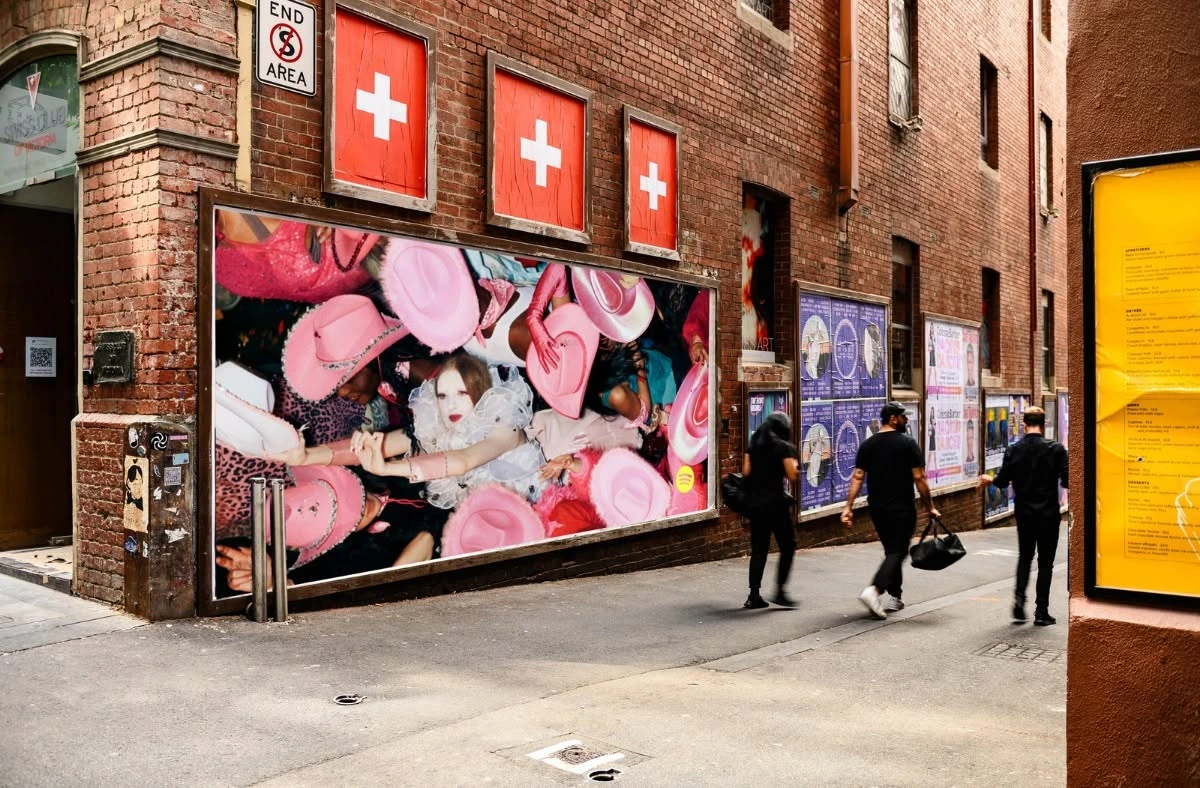
Street posters give you a physical format you can concentrate around specific places.
That matters when your audience is concentrated in cities, precincts, entertainment areas, shopping districts, campuses or particular routes.
You can also control the level of activity more deliberately.
A smaller number of well-chosen sites can give you a consistent physical presence. When an important campaign approaches, you can increase coverage or change the creative.
Our street poster advertising network gives you a way to plan that physical presence around the locations that matter to your campaign.
Street posters can also work when you don’t have a promotional message to lead with. Your logo, colour system, visual identity, tagline or other distinctive assets can do the work.
The aim isn’t to make every poster say something new.
It’s to make your brand recognisable when your audience sees it again.
When Always-On Street Posters Make Sense
Always-on doesn’t mean you need posters everywhere, all year.
For you, it can make sense when:
- You have long gaps between major campaigns.
- Your audience is concentrated in particular cities, precincts or routes.
- Familiarity matters before someone makes a purchase or decision.
- You have distinctive brand assets that can work without a promotional message.
- You want a physical presence between larger campaigns.
- Your budget works better when you concentrate frequency rather than spread activity too thinly.
The practical approach is usually a smaller baseline presence, rather than maximum coverage all year.
You might maintain a consistent group of priority sites, then increase coverage when a launch, tour, festival, seasonal push or other commercial moment approaches.
That gives you continuity without pretending every month needs the same media weight.
How To Build An Always-On Plan
You only need to work through four decisions.
1. Where Your Audience Moves
Start with the places that matter to your audience, not a generic national footprint.
Which cities, precincts, routes or environments give you the strongest opportunity to get seen?
Our national network can help you think through where a concentrated street poster presence makes sense.
2. What Level Of Presence You Can Sustain
Work backwards from your budget.
What can you realistically maintain as a baseline without compromising the campaigns that need heavier investment?
You’ll usually get more value from concentrating your presence in priority locations than spreading a small budget too thinly.
3. How Long Your Campaign Should Run
Your run length determines how long your posters stay live.
Think about how that works with your coverage, budget and wider campaign calendar. Production also needs to be part of the plan. Creative specifications, quantities and turnaround times can affect when you can go live.
You can review poster specifications and formats before production starts.
4. What Changes When Your Next Campaign Approaches
Your baseline doesn’t need to stay fixed.
A simple planning model is:
Baseline presence → Build-up → Campaign burst → Return to baseline
You maintain a useful level of visibility, build coverage when a commercial moment approaches, create the campaign burst, then return to your baseline once it’s over.
Street Posters Vs Other OOH Formats
You don’t need to decide which OOH format is universally “best”.
You need to decide which format solves the job you have.
| If you need to… | Street posters can help you… |
| Build a concentrated local presence | Focus coverage in specific precincts and locations |
| Create repeated exposure | Keep selected sites working over a defined run |
| Stay visible between campaigns | Maintain a smaller baseline presence |
| Reach entertainment or cultural audiences | Show up in relevant physical environments |
| Make distinctive creative work harder | Use the poster as a physical brand canvas |
| Work with a fixed budget | Concentrate activity geographically |
If you’re weighing street posters against other formats, our OOH media planning guide gives you more context on where the format can sit within a wider plan.
Creative When There Is Nothing To Announce
No launch doesn’t mean no creative.
This is your opportunity to lean into the assets that make your brand recognisable.
Think about what you want someone to associate with your brand before they ever see a promotional message:
- Your logo
- Your colour system
- Your visual identity
- Your tagline
- A recognisable character or image
- A distinctive design style
You can also use the time between campaigns to reinforce the brand world your bigger campaigns live in.
The next poster should feel like a continuation, not a reset.
How To Defend The Spend Internally
If you’re taking an always-on proposal into a budget meeting, expect a few predictable questions.
“Why Are We Spending When There’s Nothing To Launch?”
Because the objective isn’t immediate activation. You’re maintaining brand presence and familiarity in the places your audience moves.
“Why Not Just Spend Everything Around Launch?”
Because your launch creates intensity. Your baseline maintains continuity.
Putting everything into the launch can give you a strong burst, but it also creates a gap once that activity ends.
“Why Street Posters?”
Because you can concentrate your physical presence in the locations that matter, maintain it over time, then increase coverage when a bigger campaign is coming.
That’s the argument for always-on.
Not “we need to advertise all the time.”
It’s “we need a planned level of visibility between the moments when we spend heavily.”
How You Measure Results
You don’t need to force an always-on campaign into exactly the same measurement framework as a short-term sales push. Start by deciding what you’re trying to maintain or improve.
Depending on your campaign, that could include:
- Reach and frequency
- Brand recall
- Brand recognition
- Branded search
- Website traffic
- Campaign response
- Activity in relevant locations
The important part is establishing a baseline you can compare against.
You can also build tracking into the creative through QR codes, UTM parameters or campaign-specific landing pages when direct response matters.
For a practical framework, see our guide to measuring the impact of street poster campaigns.
Plan Your Next Campaign With Rock Posters
Don’t let the gap between launches become a gap in visibility.
We can help you work out where street posters fit within your wider OOH plan, from sites and coverage to run length, production and budget.
We’re independent and Australian-owned, operating since 1986, with in-house production in Melbourne and Sydney and a national network supporting campaigns across Australia.
Planning an OOH campaign? Let’s work out where street posters fit.
Speak to the Rock Posters team about your next campaign.
Author: Paul D. Frehley
Rock Writer (Paul D. Frehley) is the editorial voice of Rock Posters, Australia’s independent out-of-home media network with printing facilities in Sydney and Melbourne. Since 1986, we’ve helped brands, events, and cultural institutions — including the National Gallery of Victoria, the Sydney Film Festival, and the Australian Museum — show up where their audiences already are. We cover campaign strategy, creative execution, and the thinking behind effective street-level and large-format advertising. As an award-winning sustainability leader, we’re also committed to making outdoor advertising better for the communities and environments where we work.