Key Insights
- Gen Z are highly active online, but that does not make them easy to reach through digital ads.
- Young Australians are not rejecting advertising entirely, but they are rejecting ads that feel intrusive, repetitive, artificial or disconnected from culture.
- YouthInsight research found 81% of young Australians say they hate ads, making advertising overload a major challenge for brands targeting this audience.
- Gen Z may be more open to advertising than many marketers assume, but the format, context and creative quality matter.
- As screen fatigue grows, physical media gives brands a way to show up outside the crowded feed.
- Outdoor advertising works because it belongs to the places where young people already move, socialise, study, shop and attend events.
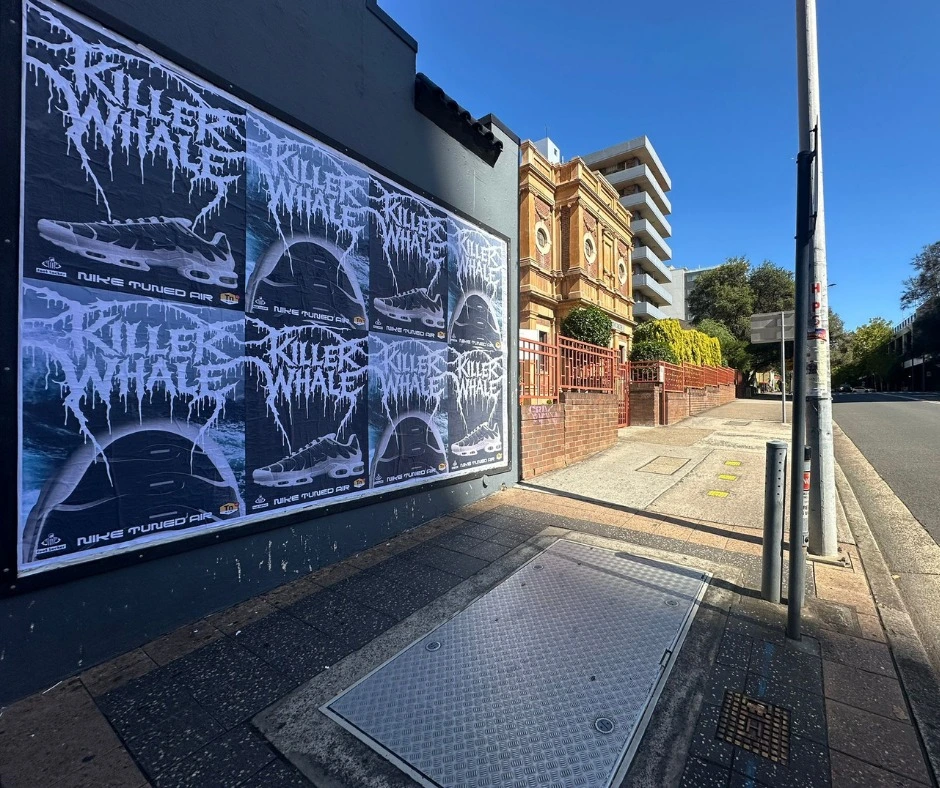
- Street posters, billboards and precinct-based campaigns can feel more public, tangible and culturally embedded than targeted digital ads.
- Outdoor can even trigger digital behaviour, with Gen Z searching, sharing, photographing and recommending brands after seeing OOH ads.
- Physical visibility can make brands feel more real in a media environment shaped by paid creators, synthetic content and algorithmic targeting.
- For Australian brands targeting Gen Z, the strongest outdoor campaigns are bold, simple, distinctive, contextual and easy to connect back to measurable outcomes.
There is a version of the Gen Z story that most Australian marketers have internalised and built their media strategies around.
It is assumed that Gen Z live on their phones. They trust creators over brands. They skip every ad they can. They are hard to reach through traditional channels. So the money goes to TikTok, to creators, to social, to short-form video, to retargeting, to whatever platform promises the next clean line into their attention.
The data tells a more complicated story.
According to the ABS 2021 Census, Gen Z made up 18.2% of Australia’s population, sitting just behind Millennials, Gen X and Baby Boomers as one of the country’s major generational cohorts.
They are also moving into greater economic influence. Afterpay’s Next Gen Index found that Gen Z and Millennials currently account for 36% of total retail spend in Australia, with that share forecast to reach 48% by 2030 as more Gen Z consumers enter the workforce.
For brands, this is an audience already shaping cultural taste, retail behaviour, entertainment demand and social proof.
But the dominant media strategy for reaching them may be built on a flawed assumption.
Because the most screen-addicted generation is not necessarily the easiest generation to reach on screens.
The Problem is Simply Advertising Overload
Gen Z spends enormous amounts of time in digital environments, but that does not mean they are open to every message in those environments.
In fact, heavy digital exposure may actually be part of the problem.
YouthInsight’s 2025 research with We Are Different surveyed 1,000 Australians aged 14 to 29 and found that 81% of young Australians say they hate ads. But the research makes an important distinction: young people are rejecting the way advertising currently shows up in their lives, not rejecting advertising entirely.
They are surrounded by ads inside the same few screens they use for entertainment, study, work, messages, search, shopping, banking, news and social identity. That creates a different emotional environment from traditional media exposure, which is interruption.
YouthInsight’s research found that 15% of young Australians described advertising as extremely intrusive, 45% as somewhat intrusive, and only 8% said ads were not intrusive or not intrusive at all.
Brands are often told to increase reach, increase frequency and maintain visibility across the path to purchase. In theory, that makes sense. In practice, for a young person moving through a crowded feed, it can feel like being followed, interrupted, and repeatedly sold to by brands they did not ask to hear from.
The result is predictable. They skip. They scroll. They mute. They block. They swipe past. They learn to identify paid content before they have consciously processed the message.
The Authenticity Strategy Has Become Part of The Noise
It seems that marketers have adapted to this problem.
If young audiences do not respond to polished brand ads, make the ad feel less polished. If they trust peers and creators, work with creators. If traditional creative feels too commercial, make it look native to the feed. If brand content feels too controlled, lean into user-generated content.
This has been one of the defining shifts in youth marketing over the past decade.
Creator partnerships, micro-influencer campaigns, lo-fi edits, product seeding, customer videos and UGC-style creative have all grown because they appear closer to the content Gen Z already consumes.
And there is logic behind that. Gen Z are culturally fluent. They care about tone, representation, realism and whether a brand appears to understand the world it is entering. YouGov’s US Profiles data found that 54% of Gen Z believe their lifestyles are not adequately represented in advertising, while younger audiences are also more likely to expect advertising to entertain them.
But authenticity becomes harder to maintain once every brand is trying to manufacture it.
The “real customer” testimonial, the casual creator unboxing, the TikTok-style edit, the “POV” ad, the intentionally underproduced brand video — all of these can work. But they are no longer inherently surprising, and audiences know the codes.
Gen Z can often tell when a brand is trying to look less like a brand.
That does not mean influencer marketing or UGC has lost value. It means these formats now compete in the same crowded attention economy as everything else on the screen.
The harder question is not “How do we make digital advertising look more authentic?”
It is: where can a brand show up in a way that feels materially different from the feed?
Remember, Gen Z Do Not Reject Advertising
One of the more interesting contradictions in youth marketing is that Gen Z are often described as anti-advertising, yet research suggests younger audiences can be more open to advertising than older groups.
The UK Advertising Association’s Value of Trust research found that in 2023, 50% of 18 to 34-year-olds trusted the ads they saw or heard, compared with 39% of 35 to 54-year-olds and 22% of those aged 55 and over.
That is the trust paradox.
The generation most associated with advertising scepticism may not distrust advertising as a concept. They distrust advertising that feels intrusive, manipulative, lazy, repetitive or disconnected from culture.
This distinction matters enormously.
It means brands do not need to abandon advertising to reach Gen Z. They need to reconsider the format, context and feeling of the advertising itself.
An ad that interrupts a video can feel like an obstacle.
An ad that follows someone across the internet can feel invasive.
An ad that appears in the middle of a private feed can feel like clutter.
But an ad that appears in the real world, such as on a wall, in a laneway, beside a venue, near a train station, outside a university precinct, along a nightlife strip, can feel different.
It is public, physical and part of the environment. It is not pretending to be a friend, a creator or a piece of organic content. It is advertising, but with a different social contract.
That is where outdoor advertising becomes interesting again.
Screen Fatigue Has Changed The Cultural Context
The conversation around young people and screens has also changed.
For years, the default marketing assumption was that more digital time meant more digital opportunity. But by 2026, the public conversation has shifted. Screen time is no longer treated as an unquestioned good. It is tied to concerns around attention, well-being, privacy, algorithmic influence, low-quality content and platform accountability.
Australia is now one of the clearest examples of this shift.
From 10 December 2025, many social media platforms are not allowed to let Australians under 16 to have accounts. eSafety describes the law’s aim as protecting young people from design features that encourage excessive screen time and from content that can be harmful to health and wellbeing.
This does not mean Gen Z are going offline, but it does show that Australia’s cultural and regulatory environment is moving beyond the simple idea that more screen engagement is always better.
Outdoor Advertising is Now Post-Digital Media
Outdoor advertising is often treated as a traditional channel, but that framing undersells what it now does.
In Australia, OOH reaches 97% of Australians weekly, or around 22 million people aged 14+. The Outdoor Media Association also reports that 8 in 10 Australians leave home each day and that 95 million trips are made.
Additionally, the Australian OOH industry recorded $1.4495 billion in net media revenue in 2025, up 11.43% from 2024. Digital Out of Home accounted for 76.6% of total net revenue in 2025.
Street posters, paste-ups, billboards and precinct-based outdoor campaigns can place a brand in the same environments where young people socialise, commute, study, shop, go out, attend gigs, discover events and build cultural memory.
That distinction is important.
Digital advertising follows the person.
Outdoor advertising belongs to the place.
For Gen Z, place still matters. Laneways, music districts, entertainment strips, shopping precincts, university areas, public transport corridors and nightlife hubs are their social and cultural environments. And so these are places where relevant brands can feel present without feeling invasive.
Outdoor Has a Social Amplification Advantage
YouGov’s 2024 Profiles data found that 48% of Gen Z say they recommend products they have seen advertised on posters and billboards, while 54% of Gen Z frequently search for products on their phones after seeing OOH ads.
One of the most underused arguments for outdoor advertising is that it is not limited to the people who physically walk past it.
A good outdoor campaign can travel.
OAAA and Harris Poll research in the US found that 67% of Gen Z and Millennials recalled seeing an OOH ad reposted on social media, while 91% of Gen Z and 82% of Millennials said they would reshare an OOH ad on social media. The same research found that 85% of Gen Z had engaged with OOH ads.
This is the overlooked multiplier.
A street poster campaign can begin in one physical location and then extend through TikTok, Instagram, Reddit, group chats, news coverage, creator posts and brand-owned social. The initial media placement is physical, but the reach does not have to stay physical.
That matters because Gen Z are empowered to become media distributors.
They screenshot, repost, duet, stitch, photograph, remix, quote and share. A campaign that gives them something visually distinctive to work with has a better chance of moving beyond paid placement into earned attention.
Physical Presence Makes Brands Feel More Real
For Gen Z, brand discovery is rarely linear.
They might first see a brand in a TikTok comment section, then check the Instagram account, then search reviews, then visit the website, then see a poster near a venue, then hear a friend mention it, then search again weeks later.
Each touchpoint contributes to whether the brand feels real.
That is where physical visibility has an advantage. In a media environment increasingly shaped by AI-generated content, paid creators, synthetic reviews, automated funnels and algorithmic targeting, a real-world campaign can act as a trust signal.
A physical placement, such as a poster or billboard, suggests the brand has invested in being seen beyond the feed.
Why This Matters for Australian Brands
The opportunity for Australian brands is that digital life has become so saturated that physical advertising can now create a different kind of attention.
For brands trying to reach younger audiences, the question should be:
Where can we show up in a way that feels visible, relevant and worth noticing?
That answer will vary by brand. A music festival may need inner-city street poster coverage near nightlife and gig precincts. A fashion label may need high-impact walls in culturally influential suburbs. A retail campaign may need posters and billboards close to shopping corridors. A product launch may need outdoor creative that is simple enough to read quickly but distinctive enough to photograph.
That is where poster design, format, size, location and timing become strategic decisions, not production details.
The strongest Gen Z outdoor campaigns are:
- Bold enough to stop someone walking
- Simple enough to understand in seconds
- Distinctive enough to photograph
- Contextual enough to belong in the area
- Measurable enough to connect back to business outcomes
The Brands That Win Gen Z Will Not Just Chase Them Online
As we’ve explored, Gen Z are over-reached in the wrong environments.
They have grown up inside feeds, platforms, pre-rolls, sponsored posts, creator deals, retargeting sequences and algorithmic recommendations. They know the language of digital advertising because they have been surrounded by it for most of their lives.
Lazy advertising is easier to ignore, and outdoor advertising becomes more relevant again.
It gives brands a way to show up publicly, physically and contextually. It can build trust without pretending to be organic. It can trigger digital action without starting as another screen interruption. It can turn a wall, a billboard or a poster into a cultural touchpoint.
The most screen-addicted generation may still spend much of its life online.
But for brands serious about building recognition with Australian Gen Z, outdoor advertising is one of the few channels capable of making digital audiences look up.

Author: Paul D. Frehley
Rock Writer (Paul D. Frehley) is the editorial voice of Rock Posters, Australia’s independent out-of-home media network with printing facilities in Sydney and Melbourne. Since 1986, we’ve helped brands, events, and cultural institutions — including the National Gallery of Victoria, the Sydney Film Festival, and the Australian Museum — show up where their audiences already are. We cover campaign strategy, creative execution, and the thinking behind effective street-level and large-format advertising. As an award-winning sustainability leader, we’re also committed to making outdoor advertising better for the communities and environments where we work.