Consumers have never been more connected, or more sceptical. According to the 2024 Edelman Trust Barometer, only 48% of people globally say they trust the information they see in advertising. Add to that the fatigue of banner ads, influencer endorsements, and algorithm-driven content, and it’s clear the digital marketing machine has a trust problem.
For marketers, that trust gap has real consequences. Without credibility, even the most innovative campaigns fail to convert. Audiences today crave something that feels real.
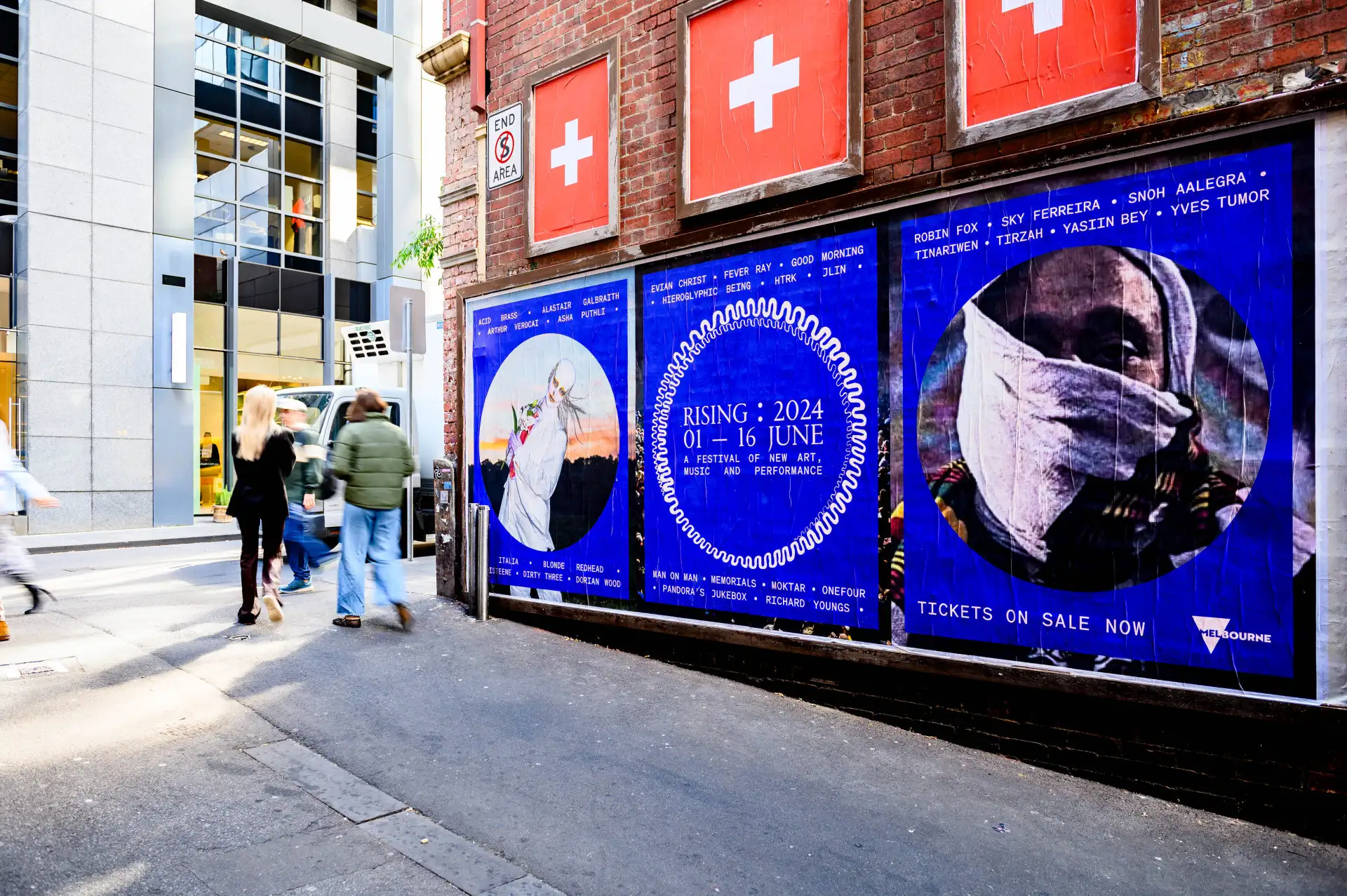
From our experience, street posters and static billboards have remained one of the few media that feel genuine, public, and transparent in Australia’s advertising space. Let’s explore.
The Erosion of Trust in the Digital Landscape
Digital marketing has revolutionised brand storytelling, but it’s also eroded the clarity between authenticity and manipulation. With repeated privacy breaches, opaque data-tracking practices and a surge in fake online reviews, audiences are increasingly wary of what they encounter on their screens.
According to research published by the Out of Home Advertising Association of America (OAAA) in 2024, 73% of consumers reported a favourable view of digital out-of-home (DOOH) advertising, compared with just 37% for online digital ads.
At the same time, a broader industry overview from the Advertising Association (UK) shows that overall trust in advertising has only risen from about 30% to 39% over the past two years.
What does this mean?
- Quality digital campaigns are competing in an environment of oversaturation and diminished trust.
- Many users now skip, block or ignore conventional online ads (e.g., banner ads, social media placements), intensifying the challenge of cutting through the noise.
- In contrast, media channels that feel less intrusive or more “real-world” are gaining in credibility.
That’s precisely why out-of-home media are regaining strategic relevance. They inhabit physical, shared spaces where advertising doesn’t feel like a personal intrusion, restoring some of the trust and presence that digital channels have diluted.
The Psychology of Tangibility: Why Physical Presence Builds Credibility
Humans are sensory creatures. What we can touch, see, or physically experience tends to feel more “real” than what we scroll past. Research from Temple University’s Center for Neural Decision Making found that paper-based advertising activates the brain’s ventral striatum — the region associated with value and desire — more strongly than digital messages.
In other words, physical media leaves a stronger emotional imprint. Posters, wheat-pasted or billboard-mounted, exist in a shared public space. They’re not targeted or ephemeral. They stay put. And that permanence sends a message of legitimacy.
A brand that invests in the physical world signals confidence and commitment. It’s saying, “We’re here, we’re visible, and we’re part of your environment.” That silent statement builds credibility — the kind of brand equity that can’t be bought through a CPM bid.
Posters as Social Proof in the Public Realm
There’s an unspoken psychology to seeing a poster on the street. It acts as social proof—a visible endorsement others can see, too. Unlike digital impressions, which occur in isolation, posters exist in shared spaces: along tram lines, near venues, at local cafés. They become part of the community’s visual fabric.
When audiences see a poster repeatedly, it builds familiarity. Familiarity breeds trust, a principle long understood in behavioural marketing. That’s why brands from local breweries to major streaming platforms continue to invest in street posters: they know consistency in the real world creates credibility in the mind.
Consider a political campaign or social cause. A poster in the public realm carries weight because it’s out there for everyone to see, accountable, unfiltered, and tangible. That’s something no digital banner can replicate.
Local Connection and Ethical Visibility
Trust can also be about ethics, and posters simply don’t track your behaviour, collect your data, or interrupt your scrolling. They respect the viewer’s space.
In this way, outdoor advertising becomes one of the most ethical forms of communication available to brands. It’s transparent by design. When you see a poster, you know exactly who’s speaking to you, and there’s no hidden algorithm deciding why.
This ethical foundation extends to how posters are produced and placed. At Rock Posters, sustainability isn’t an afterthought; it’s a core principle. From biodegradable pasting materials to recycling initiatives and waste reduction systems, our approach ensures campaigns leave a positive footprint.
That authenticity and responsibility reinforce the trust that posters naturally command.
The Data: Measuring Trust and Recall
It’s one thing to say posters build trust; it’s another to prove it with metrics. The Outdoor Media Association (OMA) reports that out-of-home (OOH) formats reach 93% of Australians living in and around capital cities, underscoring how physical advertising still delivers mass exposure.
Meanwhile, a recent Kantar study found that OOH advertising can deliver a 13.3% boost in ad awareness compared with digital media, TV and CTV.
On the measurement side, modern OOH is no longer a “set-and-forget” medium: with mobile-data mapping, geolocation tracking, QR or NFC integrations, and pluggable metrics, the industry can now track engagement, visitation, and conversion from the physical medium back into digital behaviours.
The New Role of Posters in an Omnichannel Strategy
When someone sees your brand on a wall, then later on their feed, it triggers what marketers call cross-channel reinforcement. Physical presence makes digital content feel more credible. In fact, studies show that campaigns combining OOH and digital can increase brand trust and purchase intent by up to 23% compared to digital-only executions (Nielsen OOH Fusion Study, 2023).
For marketers, this is the opportunity: use posters not just as static placements, but as credibility catalysts. A QR code can bridge the physical and digital, a localised creative can drive community engagement, and repetition across streetscapes can sustain long-term trust.
Authenticity offline translates to authority online.
Building Trust Through Tangible Media
As technology continues to reshape marketing, trust remains the currency that matters most. And in a landscape flooded with fleeting impressions, the poster stands as a quiet, confident constant.
Brands that show up in the physical world become part of people’s lived environments. That’s what makes poster campaigns so powerful in building lasting, meaningful trust.
At Rock Posters, we believe that marketing should feel honest, grounded, and impactful. That’s why we’ve spent decades helping brands create campaigns that people can’t miss.
If you’re ready to build trust through authentic, tangible media, chat with our team about a campaign strategy that connects credibility with creativity.