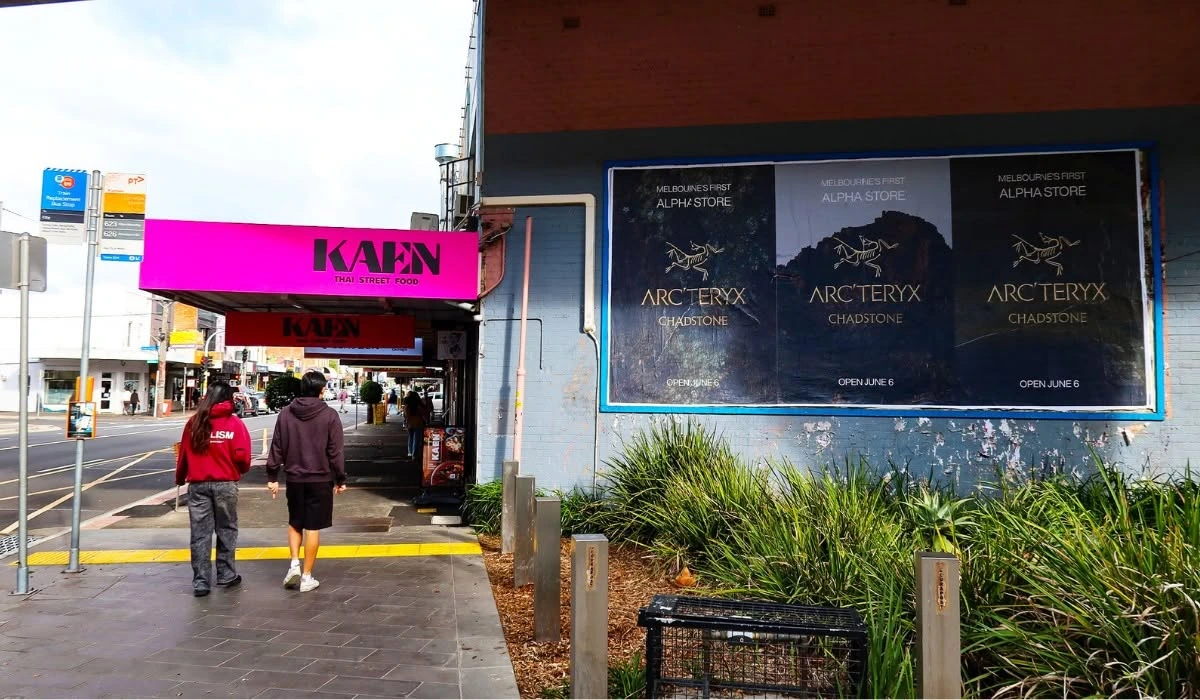
Australia’s out-of-home (OOH) advertising market has opened the second half of 2026 in strong shape. According to the Outdoor Media Association (OMA), net media revenue grew 5.58% in the second quarter to reach $385 million, up from an adjusted $364 million in the same period a year earlier. Brands are putting more money into the channel, quarter after quarter.
For marketers planning their next campaign, that growth raises a practical question. Once you commit to out-of-home, where should the budget go? The default answer is digital screens. This piece makes the case for revisiting the format that tends to be overlooked in that decision: static street posters.
Australia’s OOH Market Keeps Climbing
The Q2 result continues a run of growth in which out-of-home has outpaced the wider advertising market.
TABLE 1 — Q2 2026 OOH SNAPSHOT
| Metric | Q2 2026 |
|---|---|
| Net media revenue growth | +5.58% year on year |
| Total quarterly revenue | $385 million |
| Prior-year comparison | $364 million (adjusted) |
| Digital OOH share of revenue | 77.1% (up ~1.1 points YoY) |
| Classic/static share | Close to a quarter of the market |
Source: Outdoor Media Association, Q2 2026 revenue results.
Why Out-Of-Home Keeps Working
OOH refers to any visual marketing or advertising that reaches consumers outside their homes. This means that OOH has a structural advantage that most channels cannot claim. It cannot be skipped, blocked, muted or scrolled past. If someone is in the space, the ad is part of their environment.
And that presence appears to translate into results. A US analysis prepared by Solomon Partners for the Out of Home Advertising Association of America, which aggregated a range of advertising studies, found that out-of-home delivers strong consumer recall relative to other major media, ahead of television, radio, print and online.
Our article on the Science of Brand Recall helps explain the effectiveness of outdoor advertising, but simply:
- OOH ads can deliver high-frequency that respects the neuroscience of memory
- Ads can be strategically placed where your audience is contextually ready to engage
- Real-world visibility builds trust
Static Growth With Digital
Look closely at the revenue split, and a pattern emerges. Digital out-of-home now accounts for 77.1% of total revenue, up just over one percentage point on the previous year. It commands most of the spending in this category.
That leaves classic static formats, the category that covers street posters and static billboards, at close to a quarter of the market. The useful detail is what has happened to that share in dollar terms. As the overall market has grown, static revenue has held steady rather than declined.
Static And Digital, Side By Side
Static street posters and digital screens are not competitors so much as different tools for different jobs.
TABLE 2 — STATIC STREET POSTERS VS DIGITAL OOH
| Consideration | Static street posters | Digital OOH |
|---|---|---|
| Presence over time | Holds a fixed spot for the full campaign period | Rotates with other advertisers in a screen loop |
| Environment | Saturates specific precincts, high streets and laneways | Concentrated at premium, high-traffic screen sites |
| Creative | One strong, consistent execution in place | Motion, plus dynamic and contextual updates |
| Cost profile | Cost-efficient for sustained reach and frequency | Premium for prime inventory |
| Best suited to | Music, events, hospitality, challenger brands, precinct saturation | Broad reach, dayparting and real-time messaging |
The point is not that one format beats the other. The strongest out-of-home plans use both, matching the format to the objective.
What Street Posters Do That A Screen Can’t
1. They own the environment
A poster campaign can saturate a specific precinct, high street or laneway, putting a brand everywhere the right audience walks.
For music, events, hospitality and challenger brands trying to establish themselves in a particular scene, that concentrated, repeated presence builds a sense of cultural momentum that a shared digital screen, rotating through a dozen other advertisers, struggles to match.
2. They feel like part of the place
A printed poster sits in the physical fabric of a street. It reads as part of the culture rather than another screen competing for attention. That authenticity carries real weight with younger, culturally engaged audiences who are quick to notice when something feels genuine.
3. They are cost-efficient over time
Static placements allow a brand to maintain a continuous presence throughout a full campaign period without the premium associated with prime digital inventory. For sustained reach and frequency, they make them an efficient way to stretch a budget.
Building Street Posters Into Your Plan
For marketers shaping an out-of-home campaign, the practical move is not to choose static or digital, but to give each a clear role.
Consider street posters when your objective is depth in a defined area: launching in a city, owning the precinct around a venue, or reaching a specific cultural audience where they gather.
Consider digital when you need a broad reach, flexible messaging or the ability to change creative by time of day. Most strong campaigns combine the two, using digital for scale and static for saturation and cultural credibility in the places that matter most.
The opportunity in a growing market is to plan deliberately and ensure static street posters earn their place, rather than defaulting the entire budget to screens.
Why Rock Posters
Rock Posters has been at the forefront of street poster advertising since 1986. Today, the business runs a national street poster network from Melbourne and Sydney, which means a brand can book a genuinely national campaign through a single point of contact. Four decades in, we understand these environments, these audiences and this format, and we help brands use them to real effect.
If you are shaping your next out-of-home campaign, static street posters deserve a place on the plan. Discuss your upcoming campaign with our team today.

Author: Paul D. Frehley
Rock Writer (Paul D. Frehley) is the editorial voice of Rock Posters, Australia’s independent out-of-home media network with printing facilities in Sydney and Melbourne. Since 1986, we’ve helped brands, events, and cultural institutions — including the National Gallery of Victoria, the Sydney Film Festival, and the Australian Museum — show up where their audiences already are. We cover campaign strategy, creative execution, and the thinking behind effective street-level and large-format advertising. As an award-winning sustainability leader, we’re also committed to making outdoor advertising better for the communities and environments where we work.